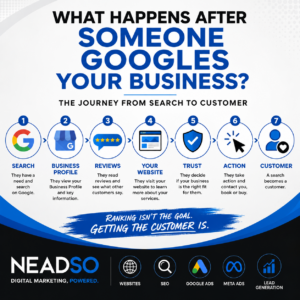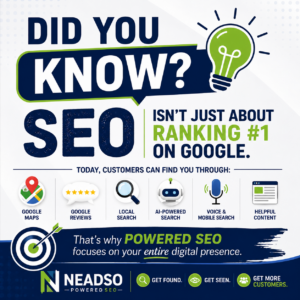
If you’ve ever asked yourself, “Why doesn’t my business show up on Google?” — you’re not alone.
Many business owners assume Google magically finds and ranks their website. In reality, Google follows a very specific process to discover, understand, and rank businesses online.
Understanding how this process works is the first step to improving your visibility and attracting more customers.
1. Google Needs to Find You First
Before Google can rank your business, it has to know you exist.
Google finds businesses in several key ways:
- Your website
- Your Google Business Profile
- Mentions of your business on other websites
- Social media and directory listings
If your business is missing or inconsistent across these places, Google may struggle to trust or show your information.
Tip: If your website isn’t properly built or indexed, Google may never fully “see” it.
2. Your Website Tells Google What You Do
Google doesn’t “see” your website the way people do.
Instead, it reads code, words, structure, and signals to understand:
- What your business offers
- Where you are located
- Who your services are for
Clear page titles, readable content, and location-specific keywords help Google accurately categorize your business.
For example:
“Window Installation in Rhode Island” is clearer than
“Quality Services You Can Trust”
The clearer your message, the easier it is for Google to match your business to real searches.
3. Location Matters More Than You Think
When people search things like:
- “urgent care near me”
- “window blinds in Rhode Island”
- “marketing agency Charlestown RI”
Google prioritizes businesses that clearly show where they are located.
This comes from:
- Your Google Business Profile
- Your website’s contact and location pages
- Consistent business name, address, and phone number (NAP)
If your location data is inconsistent across the web, Google may rank a competitor instead.
4. Google Looks for Trust Signals
Google’s main goal is to show users businesses they can trust.
To decide this, Google looks for signals like:
- Reviews and ratings
- Website security (HTTPS)
- How often your site is updated
- Links from other reputable websites
- Professional design and usability
A neglected or outdated website sends the wrong message — not just to customers, but to Google.
5. Content Helps Google Understand Your Authority
Google favors businesses that educate and provide value.
Helpful content shows Google:
- You understand your industry
- Your website is active
- You answer real customer questions
Examples of strong content include:
- Blog articles
- Service explanations
- FAQs
- Location-based pages
This is why blogging and regular updates play a big role in long-term SEO success.
6. Consistency Is Key
One of the biggest mistakes businesses make is being inconsistent online.
Google expects:
- The same business name everywhere
- The same address formatting
- The same phone number
Even small variations can hurt your credibility in search results.
Consistency builds confidence — for Google and for customers.
7. SEO Is Not Instant — It’s a Process
Google doesn’t rank businesses overnight.
SEO success comes from:
- Clean website structure
- Clear messaging
- Ongoing content updates
- Long-term consistency
The businesses that rank well are usually the ones that committed to doing it right — not the ones looking for shortcuts.
What This Means for Your Business
If Google isn’t sending customers your way, it’s usually not about luck.
It’s about visibility, clarity, trust, and consistency.
Understanding how Google really finds your business allows you to:
- Make smarter marketing decisions
- Avoid wasted effort
- Build long-term growth online
Need Help Improving Your Visibility?
At Northeast Advertising Solutions, we help businesses build websites and digital strategies that Google understands — and customers trust.
If you’re ready to improve how your business shows up online, we’re here to help.