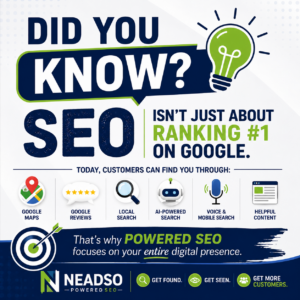
If you’re a local business owner trying to attract more customers, you’ve probably asked yourself: Should I invest in Google Ads or Local SEO? The truth is that both can drive leads, phone calls, and sales—but they work very differently and deliver results on different timelines.
The best choice depends on your goals, budget, competition, and how quickly you need results.
What Is Google Ads?
Google Ads allows your business to appear at the top of Google search results for targeted keywords. You pay when someone clicks your ad, making it a form of pay-per-click (PPC) advertising.
For example, if someone searches for:
- “roof repair near me”
- “kitchen remodeling contractor”
- “reglazing company near me”
your ad can appear above the organic search results.
Advantages of Google Ads
✅ Immediate visibility
✅ Fast lead generation
✅ Highly targeted audiences
✅ Easy to track results
✅ Scalable budgets
Google Ads is often the fastest way to get your phone ringing, especially for new businesses that don’t yet rank organically.
Disadvantages of Google Ads
❌ Leads stop when spending stops
❌ Can become expensive in competitive industries
❌ Requires ongoing optimization
❌ Clicks don’t guarantee conversions
Think of Google Ads as renting prime real estate. As long as you’re paying, you’re visible. Stop paying, and the visibility disappears.
What Is Local SEO?
Local SEO focuses on improving your business’s organic visibility in Google Search and Google Maps.
This includes:
- Optimizing your Google Business Profile
- Getting more reviews
- Creating local content
- Building citations
- Optimizing website pages
- Improving website speed and user experience
The goal is to rank organically when local customers search for your services.
Advantages of Local SEO
✅ Long-term traffic growth
✅ Increased trust and credibility
✅ Better Google Maps visibility
✅ Lower long-term cost per lead
✅ Continues generating leads without paying per click
Once strong rankings are established, Local SEO can become one of the most cost-effective marketing channels available.
Disadvantages of Local SEO
❌ Takes time
❌ Requires consistent effort
❌ Results vary by market competition
❌ Rankings are never guaranteed
Unlike Google Ads, Local SEO is more like owning property. It takes time to build, but the long-term value can be significant.
Comparing Google Ads and Local SEO
| Factor | Google Ads | Local SEO |
|---|---|---|
| Speed of Results | Immediate | 3-12 months |
| Cost Structure | Pay per click | Ongoing optimization |
| Lead Volume | Fast | Gradual growth |
| Long-Term Value | Lower | Higher |
| Trust Level | Moderate | High |
| Scalability | Excellent | Good |
| Sustainability | Stops with budget | Continues over time |
When Google Ads Makes More Sense
Google Ads is typically the better choice when:
You Need Leads Immediately
A new business often can’t wait six months for SEO to gain traction.
You’re Launching a New Service
Ads can quickly validate demand for new products or services.
Your Market Is Highly Competitive
In some industries, organic rankings may take years to earn. Ads can help bridge the gap.
You Have a Strong Conversion Process
If your website and sales process convert well, Google Ads can become a powerful growth engine.
When Local SEO Makes More Sense
Local SEO is usually the better investment when:
You Want Long-Term Growth
Strong organic rankings can generate leads for years.
You Have a Limited Marketing Budget
Paying for every click may not be sustainable if budgets are tight.
You Depend on Local Customers
Businesses like:
- Contractors
- Plumbers
- Roofers
- Electricians
- Landscapers
- Medical practices
- Attorneys
often benefit tremendously from strong Google Maps visibility.
You Want More Trust
Many users skip ads and go directly to the businesses that rank organically.
The Real Answer: Most Businesses Need Both
The highest-performing businesses rarely choose one or the other.
Instead, they use:
Google Ads for Short-Term Results
Ads generate immediate traffic, leads, and sales opportunities.
Local SEO for Long-Term Growth
SEO builds authority, visibility, and sustainable lead generation over time.
A smart strategy often looks like this:
Month 1-3
- Run Google Ads
- Optimize Google Business Profile
- Improve website performance
Month 3-6
- Build local SEO content
- Generate reviews
- Expand local citations
Month 6-12
- Increase organic rankings
- Reduce dependence on paid advertising
- Improve overall return on investment
Over time, many businesses see SEO-generated leads become significantly less expensive than paid leads.
Budget Recommendations
While every market is different, a common approach is:
New Business
- 70% Google Ads
- 30% Local SEO
Growing Business
- 50% Google Ads
- 50% Local SEO
Established Business
- 30% Google Ads
- 70% Local SEO
This strategy creates immediate lead flow while building a long-term marketing asset.
Final Thoughts
If you need customers this month, invest in Google Ads.
If you want sustainable growth and increased visibility over time, invest in Local SEO.
But if your budget allows, the most effective strategy is to leverage both. Google Ads can generate leads today, while Local SEO builds the foundation that helps your business attract customers for years to come.
The question isn’t always Google Ads or Local SEO—it’s often how to use them together to maximize results and reduce customer acquisition costs over time.