How Google Really Finds Your Business

If you’ve ever asked yourself, “Why doesn’t my business show up on Google?” — you’re not alone.
Many business owners assume Google magically finds and ranks their website. In reality, Google follows a very specific process to discover, understand, and rank businesses online.

Understanding how this process works is the first step to improving your visibility and attracting more customers.

1. Google Needs to Find You First

Before Google can rank your business, it has to know you exist.

Google finds businesses in several key ways:

  • Your website
  • Your Google Business Profile
  • Mentions of your business on other websites
  • Social media and directory listings

If your business is missing or inconsistent across these places, Google may struggle to trust or show your information.

Tip: If your website isn’t properly built or indexed, Google may never fully “see” it.

2. Your Website Tells Google What You Do

Google doesn’t “see” your website the way people do.
Instead, it reads code, words, structure, and signals to understand:

  • What your business offers
  • Where you are located
  • Who your services are for

Clear page titles, readable content, and location-specific keywords help Google accurately categorize your business.

For example:

“Window Installation in Rhode Island” is clearer than
“Quality Services You Can Trust”

The clearer your message, the easier it is for Google to match your business to real searches.

3. Location Matters More Than You Think

When people search things like:

  • “urgent care near me”
  • “window blinds in Rhode Island”
  • “marketing agency Charlestown RI”

Google prioritizes businesses that clearly show where they are located.

This comes from:

  • Your Google Business Profile
  • Your website’s contact and location pages
  • Consistent business name, address, and phone number (NAP)

If your location data is inconsistent across the web, Google may rank a competitor instead.

4. Google Looks for Trust Signals

Google’s main goal is to show users businesses they can trust.
To decide this, Google looks for signals like:

  • Reviews and ratings
  • Website security (HTTPS)
  • How often your site is updated
  • Links from other reputable websites
  • Professional design and usability

A neglected or outdated website sends the wrong message — not just to customers, but to Google.

5. Content Helps Google Understand Your Authority

Google favors businesses that educate and provide value.

Helpful content shows Google:

  • You understand your industry
  • Your website is active
  • You answer real customer questions

Examples of strong content include:

  • Blog articles
  • Service explanations
  • FAQs
  • Location-based pages

This is why blogging and regular updates play a big role in long-term SEO success.

6. Consistency Is Key

One of the biggest mistakes businesses make is being inconsistent online.

Google expects:

  • The same business name everywhere
  • The same address formatting
  • The same phone number

Even small variations can hurt your credibility in search results.

Consistency builds confidence — for Google and for customers.

7. SEO Is Not Instant — It’s a Process

Google doesn’t rank businesses overnight.

SEO success comes from:

  • Clean website structure
  • Clear messaging
  • Ongoing content updates
  • Long-term consistency

The businesses that rank well are usually the ones that committed to doing it right — not the ones looking for shortcuts.

What This Means for Your Business

If Google isn’t sending customers your way, it’s usually not about luck.
It’s about visibility, clarity, trust, and consistency.

Understanding how Google really finds your business allows you to:

  • Make smarter marketing decisions
  • Avoid wasted effort
  • Build long-term growth online

Need Help Improving Your Visibility?

At Northeast Advertising Solutions, we help businesses build websites and digital strategies that Google understands — and customers trust.

If you’re ready to improve how your business shows up online, we’re here to help.
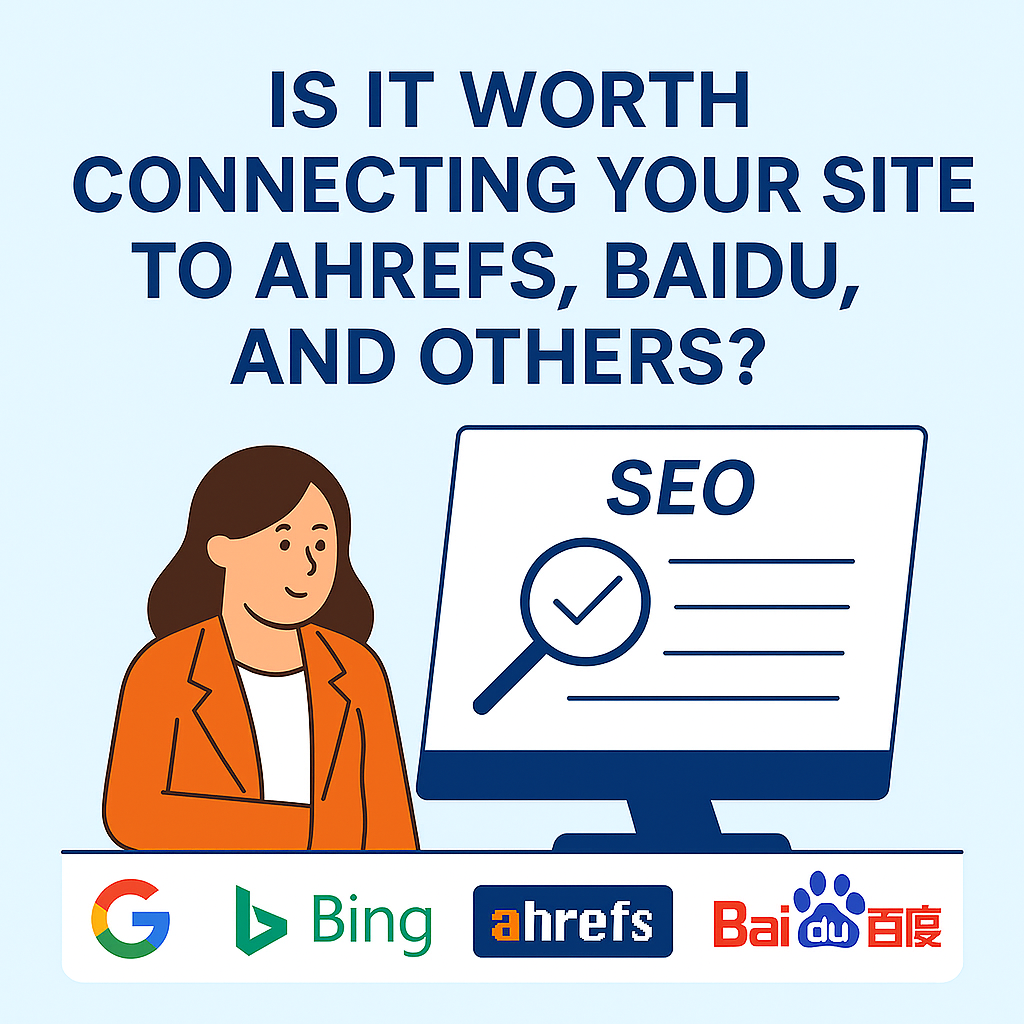
Is It Worth Connecting Your Site to SEO Platforms Like Ahrefs, Baidu, and Others? A 2026 Guide

In today’s SEO landscape, site connections and verifications—whether through Google Search Console, Bing Webmaster Tools, Baidu Webmaster Tools, or third‑party platforms like Ahrefs—play a crucial role in helping search engines understand your site, index it properly, and diagnose issues quickly. But is it actually worth your time to connect your website to all these services?

Short answer: Yes—if you choose the right ones.

Below is a breakdown, supported by verified sources, showing exactly what each connection does, why it matters, and which ones are worth prioritizing in 2026.


Why Site Connections Matter

1. Faster Crawling and Indexing

Submitting your site through official search engine webmaster tools helps search engines discover and index your content more quickly. Manual submissions aren’t always required, but they do help—especially for new websites or new pages.
Search engines automatically crawl content, but manual submission improves coverage and speed, especially when using tools like sitemaps and URL submission.

2. Monitoring Indexing Issues

Webmaster tools provide visibility into crawl errors, missing pages, and server issues—all things that hurt rankings if left unresolved. Bing Webmaster Tools’ IndexNow provides immediate feedback and insights on crawling errors and important URLs.

3. Improved SEO Performance

Third‑party SEO tools like Ahrefs provide actionable analytics, such as keyword rankings, competitor research, and backlink monitoring. Businesses use Ahrefs for keyword research, backlink insights, and site audits.

Ahrefs Webmaster Tools (AWT)—a free version—offers domain profile analysis, organic keyword insights, and technical SEO auditing, making verification especially valuable.


Which Site Connections Are Worth It? (Ranked by Priority)

1. Google Search Console (GSC)

Priority: Critical

Google still drives the majority of global search traffic. GSC lets you:

  • Submit sitemaps
  • Track indexing
  • Identify mobile issues
  • Monitor performance metrics
    Even Ahrefs notes that submitting websites to Google via sitemap submission is essential for discovery and ongoing updates.

If you connect to nothing else, connect to GSC.


2. Bing Webmaster Tools + IndexNow

Priority: High

Bing has grown significantly thanks to AI integration and partnership with Microsoft products. In 2024–2026 updates, Bing Webmaster Tools introduced new Top Insights and IndexNow features that boost visibility and help identify crawl errors, missing pages, and optimization opportunities.

IndexNow is particularly valuable because:

  • It notifies search engines instantly about new or updated content
  • Ahrefs and Yep.com fully support IndexNow integration (huge for rapid indexing)

3. Ahrefs Webmaster Tools (AWT) or Paid Ahrefs Account

Priority: Very High

Ahrefs is one of the leading SEO tools in 2026, offering:

  • Backlink analysis
  • Keyword tracking
  • Technical site audits
  • Competitor research
    It is widely used by professionals to enhance visibility and fix ranking issues.

Ahrefs AWT, while free, still gives deep domain audits, organic keyword insight, and technical issue detection. Verification is easy and often integrates directly with Google Search Console.


4. Baidu Webmaster Tools (for sites targeting China)

Priority: Only if you operate in China

Baidu requires manual website submission and verification for best visibility. Ahrefs notes that Baidu still supports manual site submissions via sitemap URLs.

If your business operates internationally—especially in Asia—this is worth doing. If not, you can skip Baidu.


5. Other Search Engines: DuckDuckGo, Yahoo, Yandex

Priority: Optional

Most of these engines rely on Bing’s index or independent crawling and don’t require manual submissions. Ahrefs confirms that DuckDuckGo and Yahoo do not require manual submission for most sites.

Should You Connect to Ahrefs, Baidu, and Others?

Here’s the overall verdict:

PlatformWorth It?Why
Google Search Console✔✔✔ CriticalIndexing, performance, crawl errors
Bing Webmaster Tools + IndexNow✔✔ HighFast indexing and insights; partners with many platforms
Ahrefs Webmaster Tools✔✔✔ Critical for SEOBacklinks, audits, keyword analysis
Baidu Webmaster Tools✔ If targeting ChinaNeeded for visibility due to China’s search ecosystem
DuckDuckGo / YahooOptional

A strong SEO foundation doesn’t happen by accident. It happens when your site is properly connected to the right platforms, monitored with the right tools, and supported by accurate technical insights. Whether you’re using Google Search Console for indexing, Bing Webmaster Tools for insights and IndexNow speed, or Ahrefs for deep technical and backlink analysis, each integration plays a role in your site’s long‑term success.

If you want to make sure your website is fully optimized, technically sound, and set up for better rankings:

👉 Let us check your site for free:
FREE SEO TOOL

This free audit tool helps identify issues, uncover optimization opportunities, and show you exactly where improvements can boost your visibility.