Someone needs a plumber. A divorce attorney. A restaurant. A local store. A landscaper.
What do they do?
They Google it.
But appearing in the search results is only the beginning.
The real question is: What happens next?
For a small business, getting found on Google is important—but getting found doesn’t automatically turn someone into a customer. There are several steps between that first search and the phone call, form submission, booking, order, or purchase.
Understanding that journey can help you build a digital marketing strategy that does more than generate traffic.
It can generate customers.
Step 1: They Search
It starts with a need.
Someone might search:
- “plumber near me”
- “divorce lawyer Rhode Island”
- “best pizza near me”
- “HVAC repair”
- “window treatments near me”
- “website design for small business”
These searches have something important in common: intent.
The person isn’t randomly browsing. They’re actively looking for information, a product, or a business that can solve a problem.
That’s why visibility on Google matters.
SEO, local SEO, Google Business Profile optimization, useful website content, and paid Google Ads can all help put your business in front of potential customers at the moment they’re looking.
But being visible doesn’t guarantee they’ll choose you.
Step 2: They Look at Your Google Business Profile
For many local searches, one of the first things people see is a Google Business Profile.
Before visiting your website, they may already be looking at your:
- Star rating
- Customer reviews
- Photos
- Business hours
- Location
- Services
- Phone number
- Recent updates
They’re already forming an opinion about your business.
An incomplete or outdated profile can create doubt. A well-maintained profile with strong reviews, accurate information, and recent activity can give someone a reason to learn more.
And that’s usually when they head to your website.
Step 3: They Check Your Reviews
People want reassurance.
They want to know that other customers have hired you, purchased from you, eaten at your restaurant, visited your office, or used your services—and had a good experience.
Reviews have become an important part of the buying process for local businesses.
A potential customer may compare your reviews with several competitors before making a decision.
But reviews alone usually aren’t enough.
The next step is often where the decision really starts taking shape.
Step 4: They Visit Your Website
They click.
Now you have their attention.
For about five seconds.
Your website needs to quickly answer some basic questions:
Am I in the right place?
Does this company provide what I’m looking for?
Do they serve my area?
Do they look trustworthy?
What should I do next?
If those answers aren’t obvious, visitors can simply hit the back button and choose another result.
That’s why your website shouldn’t just be an online brochure.
It should be built to turn visitors into customers.
Step 5: They Decide Whether They Trust You
Before someone calls, books, orders, purchases, or submits a form, they’re looking for reasons to trust your business.
Your website helps provide those signals.
Professional design matters, but trust goes much deeper than appearance.
Customers may look for:
- Reviews and testimonials
- Clear service information
- Real business photos
- Experience and credentials
- Service areas
- Frequently asked questions
- Helpful content
- Easy-to-find contact information
- Clear pricing or process information when appropriate
Every one of these elements helps answer the customer’s underlying question:
“Is this the business I should choose?”
Step 6: You Make It Easy to Take Action
This is where a surprising number of websites lose potential customers.
Someone is interested.
They’re ready to take the next step.
And they can’t figure out what to do.
Your website should make the desired action obvious.
Depending on your business, that could mean:
Call Now
Request a Quote
Schedule an Appointment
Order Online
Book Now
Shop Online
Get a Free Consultation
The easier you make it for someone to take action, the less opportunity you give them to leave and choose a competitor.
Step 7: A Search Becomes a Customer
This is the part that matters.
The goal wasn’t simply to rank on Google.
It wasn’t to get another website visitor.
It wasn’t even to get another click.
The goal was to generate a customer.
And that requires multiple pieces of your digital presence to work together.
Google Search → Business Profile → Reviews → Website → Trust → Action → Customer
That’s the real customer journey.
Digital Marketing Works Better as a System
One of the biggest mistakes small businesses make is treating every part of digital marketing as a separate project.
They have someone handling the website.
Someone else runs Google Ads.
Their Google Business Profile hasn’t been updated in six months.
Reviews aren’t being actively generated.
SEO happens occasionally.
Social media operates independently from everything else.
But customers don’t experience your marketing that way.
They experience your business.
Every interaction contributes to whether they ultimately choose you.
That’s why your website, SEO, Google presence, reviews, advertising, content, and lead-generation strategy should work together.
Getting Found Is Only the Beginning
Google can introduce someone to your business.
What happens after that determines whether you get the opportunity.
A strong digital marketing system doesn’t simply generate more traffic.
It helps the right people discover your business, understand what you offer, trust what they see, and take the next step.
Because at the end of the day, ranking on Google isn’t the goal.
Getting the customer is.
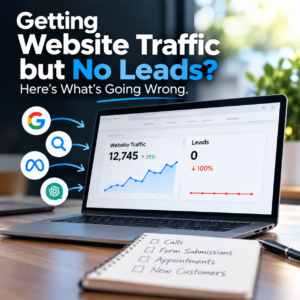
Is Your Digital Marketing Turning Searches Into Customers?
At NEADSO, we help small businesses connect the pieces—from professional websites and SEO to Google & Meta advertising, hosting, reviews, content, and lead generation.
If you’re getting traffic but aren’t sure whether your digital presence is doing enough to turn those visitors into customers, let’s take a look.
Digital Marketing, Powered.