Getting more people to your website sounds like the obvious goal.
More Google visibility. More clicks. More website visitors. More traffic from social media and advertising.
But what happens when the traffic starts showing up…and the phone still isn’t ringing?
If people are visiting your website but aren’t calling, requesting a quote, scheduling an appointment, or filling out a form, getting even more traffic may not solve the problem.
The problem may be what happens after they arrive.
Traffic Doesn’t Automatically Mean Leads
Imagine 500 people visit your website this month and only a handful contact your business.
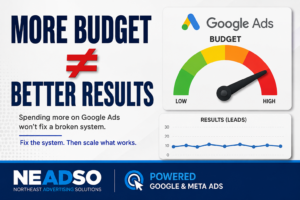
You could spend more money on Google Ads, increase your social media activity, or work on attracting another 500 visitors.
But if the website isn’t converting visitors into customers, you’re potentially just sending more people into the same broken process.
Before focusing entirely on getting more traffic, take a closer look at what visitors experience when they land on your website.
1. Visitors Can’t Immediately Tell What You Do
Someone shouldn’t have to search your website to figure out what your business does.
Within the first few seconds, a visitor should understand:
What do you offer?
Where do you offer it?
Why should they choose you?
What should they do next?
A clever headline may look great, but clarity usually matters more.
Instead of making visitors think, make the next step obvious.
2. Your Call-to-Action Is Too Hard to Find
What do you actually want someone to do?
Call?
Request a quote?
Schedule an appointment?
Fill out a form?
Buy something?
Every important page should provide a clear path toward that action.
A visitor shouldn’t have to scroll to the bottom of the website just to find your phone number or figure out how to contact you.
Buttons such as Get a Quote, Schedule an Appointment, Call Now, or Get Started can make the next step much clearer.
3. Your Website Isn’t Working Well on Mobile
A website can look great on a desktop computer and still create a frustrating experience on a phone.
Small text, oversized images, difficult navigation, buttons that are too close together, and forms with too many fields can quickly drive mobile visitors away.
That’s especially important for local businesses.
Someone searching for an attorney, contractor, restaurant, urgent care center, or other local service may be doing it directly from their phone.
Your mobile website isn’t the secondary version of your website anymore.
For many customers, it is your website.
4. Your Forms Ask for Too Much
Businesses naturally want as much information as possible from a potential customer.
Your visitors may feel differently.
If someone simply wants to ask a question or request a quote, requiring them to complete a long form can create unnecessary friction.
Ask for what you actually need to begin the conversation.
You can always gather additional information later.
A shorter, easier form can sometimes be the difference between getting the lead and losing it.
5. Your Website Doesn’t Build Enough Trust
Before contacting a business they’ve never worked with, people look for reasons to trust it.
Your website should help answer the question:
“Is this a legitimate business I feel comfortable contacting?”
Trust signals can include:
- Customer reviews
- Testimonials
- Real photos
- Professional branding
- Certifications or affiliations
- Years in business
- Clear contact information
- Service-area information
- Helpful educational content
Even small details can make a business feel more established and credible.
6. The Page Doesn’t Match Why the Visitor Clicked
This is especially important when you’re running advertising.
Imagine someone searches Google for a specific service, clicks your ad, and lands on a generic homepage that barely mentions that service.
Now they have to search for what they originally wanted.
That’s unnecessary friction.
Whenever possible, the landing page should continue the conversation that started with the search, ad, social post, or email.
If the ad promotes a particular service, the landing page should prominently discuss that service.
7. Your Website Is Too Slow
People aren’t particularly patient online.
Large images, unnecessary scripts, outdated plugins, poor hosting, and bloated website designs can all contribute to slower load times.
And every extra delay gives a potential customer another opportunity to leave.
Website performance isn’t only a technical issue.
It’s part of the customer experience.
8. You’re Not Tracking What Happens After the Click
Here’s another common problem:
Businesses know how many people visited their website, but they don’t know what those visitors actually did.
Did they call?
Submit a form?
Click an email address?
Request directions?
Schedule an appointment?
Which marketing source produced the lead?
Traffic numbers alone don’t tell the entire story.
Tracking calls, forms, conversions, and lead sources can help you understand which marketing efforts are actually generating business.
Stop Measuring Success by Traffic Alone
Website traffic is important.
But traffic is only one part of the process.
A better question is:
What percentage of those visitors become opportunities for your business?
Sometimes the solution isn’t another advertising campaign or another SEO push.
It may be improving the website experience you’re already sending people to.
Turn More Website Visitors Into Opportunities
At NEADSO, we look beyond simply getting people to a website.
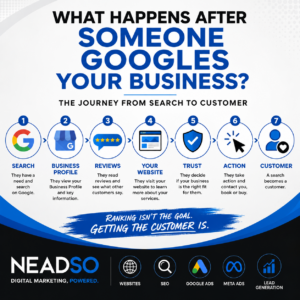
Through websites, SEO, digital advertising, forms, call tracking, hosting, content, and other integrated marketing solutions, we help businesses improve the entire path from being discovered online to becoming a lead.
Because getting found is important.
What happens next is what grows the business.