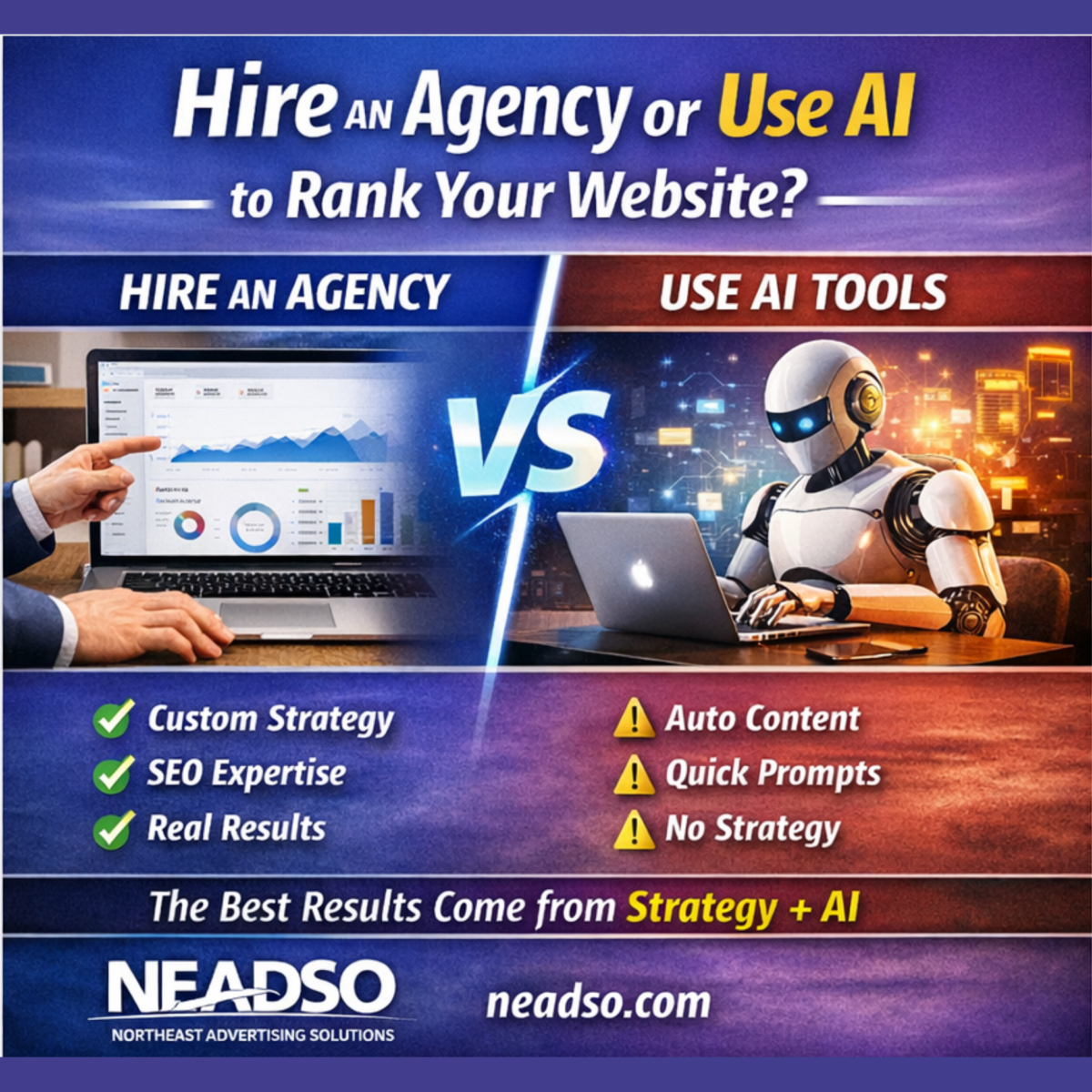
Should You Hire an Agency or Use AI to Rank Your Website?

Artificial intelligence has quickly become one of the most talked‑about tools in digital marketing. From writing blog posts to generating keyword ideas, AI promises faster results, lower costs, and instant execution.

So the question many business owners are now asking is simple:

Should you use AI to rank your website — or hire a marketing agency?

The real answer isn’t as black and white as it seems. Let’s break down what AI can do, where it falls short, and why businesses that rely on rankings for revenue still need expert strategy.

What AI Is Actually Good At for SEO
There’s no denying it — AI can be a powerful tool when used correctly.
AI excels at:

Generating content drafts quickly
Brainstorming topic ideas
Suggesting keywords and variations
Writing meta titles and descriptions
Analyzing surface‑level competitor content
Speeding up research and execution

For businesses that already understand SEO fundamentals, AI can dramatically increase efficiency. It saves time, reduces manual work, and helps scale content production.
But speed alone does not equal results.

Where AI Falls Short (And Why Rankings Stall)

Here’s where many businesses run into trouble.

AI does not understand context, risk, or long‑term strategy. It produces information based on patterns, not business goals or search engine nuance.

AI cannot:

  • Recognize real‑time Google algorithm changes
  • Diagnose technical SEO problems safely
  • Decide which keywords actually convert into revenue
  • Build authority through relationships and backlinks
  • Adapt strategy when results plateau
  • Protect your site from over‑optimization or penalties

In fact, many sites using AI alone end up:

  • Publishing thin or repetitive content
  • Over‑optimizing keywords unintentionally
  • Ignoring local SEO opportunities
  • Ranking for traffic that doesn’t convert
  • Plateauing after initial gains

AI will happily give you an answer — but it won’t tell you if it’s the right answer.

Ranking a Website Is More Than Writing Content

One of the biggest misconceptions about SEO is that it’s just about content.

In reality, ranking involves:

  • Technical site health
  • Page structure and internal linking
  • Search intent alignment
  • Local visibility signals
  • Conversion optimization
  • User behavior metrics
  • Authority and trust signals

AI might help write a blog post — but it doesn’t build a cohesive system that turns visibility into revenue.

That’s where strategy matters.

What a Marketing Agency Brings That AI Can’t

A professional agency brings experience, accountability, and judgment — the things AI lacks.

A good agency:

  • Builds a custom SEO strategy around your business goals
  • Understands how Google behaves in your specific industry
  • Balances content, technical SEO, local search, and paid channels
  • Uses data to guide decisions — not guesses
  • Adjusts strategy as algorithms and trends change
  • Measures success by leads, calls, and sales, not just rankings

At NEADSO, we’ve seen firsthand that rankings without conversion are meaningless. Traffic is only valuable if it produces growth.

AI doesn’t understand your margins.
AI doesn’t know your customers.
AI doesn’t care if your phone rings.

An experienced agency does.

The Smartest Approach: Strategy + AI (Not One or the Other)

The most successful businesses don’t choose AI instead of an agency.

They choose:

  • Expert strategy powered by AI tools
  • Human oversight controlling execution
  • AI assisting with speed, research, and scale
  • Experience guiding decisions and risk management

Used correctly, AI becomes an accelerator — not a replacement.

Think of AI as the engine.
The agency is the driver, the map, and the mechanic.

Without direction, even the fastest engine goes nowhere.

When AI Alone Might Make Sense

Using AI without an agency may be acceptable if:

  • SEO is not mission‑critical to your revenue
  • You already understand SEO deeply
  • You’re comfortable experimenting and learning slowly
  • Short‑term results matter more than long‑term growth

For most businesses, however, SEO mistakes are expensive — not just in rankings, but in lost opportunities.

When Hiring an Agency Is the Better Choice

Hiring an agency is the smarter move when:

  • Rankings directly impact revenue
  • You want predictable, scalable growth
  • You need results without risking penalties
  • You want strategy aligned with conversion
  • You don’t want to guess your way forward

SEO isn’t about gaming algorithms. It’s about building visibility that turns into customers.

Final Thoughts: AI Is a Tool — Strategy Is the Advantage

AI is transforming digital marketing, and it’s here to stay. But tools alone don’t create success — strategy does.

AI replaces repetitive tasks. AI speeds up execution. AI improves efficiency.

But AI does not replace experience.

The businesses winning in search are the ones combining:

  • Human expertise
  • Data‑driven strategy
  • Smart use of AI tools
  • Ongoing optimization and adaptation

At NEADSO, we believe AI should support your marketing — not run it.

Want to learn how an expert‑led strategy, powered by modern tools, can help your business grow?
👉 Learn more at neadso.com
WordPress vs. Squarespace: Which Platform Helps Your Website Rank on Google?

At Northeast Advertising Solutions (NEADSO), one of the most common questions we hear from business owners is:

“Should I use WordPress or Squarespace if I want to rank on Google?”

The short answer: both platforms can rank, but only one gives you the long‑term control and flexibility needed for serious growth.

If SEO, lead generation, and measurable results matter to your business, the platform choice is more than a design decision—it’s a strategic one.

SEO Starts With Strategy—Not the Platform

Before comparing tools, let’s be clear:

👉 No website ranks simply because it’s built on WordPress or Squarespace.
Websites rank because of:

  • Strong SEO strategy
  • High‑quality content
  • Technical optimization
  • Consistent execution over time

That said, some platforms make winning much easier than others.

WordPress: Built for SEO Growth

At NEADSO, WordPress is our preferred platform for businesses focused on visibility, performance, and scalability.

Why WordPress Excels at SEO

WordPress gives you full control over critical ranking factors, including:

  • Custom page titles and meta descriptions
  • SEO‑friendly URL structures
  • Schema markup for enhanced search results
  • Advanced redirects and indexing control
  • Detailed content organization (categories, tags, silos)

With professional SEO plugins like Rank Math or Yoast, WordPress becomes a powerful optimization engine.

✅ Best for: Businesses that want to actively grow organic traffic and compete in search results.

Squarespace: Simple, Clean, but Limited

Squarespace is known for ease of use—and that’s exactly where its advantages stop.

What Squarespace Does Well

  • Clean templates
  • Mobile‑friendly design
  • Built‑in hosting and security
  • Basic SEO settings (titles, descriptions, sitemaps)

Where Squarespace Falls Short

  • Limited technical SEO access
  • Restricted schema and structured data control
  • Minimal flexibility for custom optimizations
  • Difficult to scale content strategies

✅ Best for: Small, brochure‑style websites where SEO is not a major growth driver.

Site Performance & Page Speed

Google prioritizes page speed and Core Web Vitals when ranking websites.

WordPress Performance

With proper setup, WordPress can outperform almost any platform:

  • High‑performance hosting
  • Optimized themes
  • Image compression
  • Caching and performance plugins

⚠ Important: Poor WordPress setups hurt rankings—but this is a strategy and management issue, not a platform flaw.

Squarespace Performance

Squarespace handles hosting and optimization automatically, which means:

  • Consistent baseline performance
  • No server access or advanced tuning
  • Less room for improvement as your site grows

✅ Good for simplicity
❌ Limited for competitive markets

Content Is King—and WordPress Wears the Crown

At NEADSO, we build SEO around content that converts.

WordPress Content Advantages

  • Designed for blogging and publishing
  • Easy internal linking
  • Strong content hierarchy
  • Ideal for service pages, guides, and SEO silos

If content marketing is part of your plan, WordPress gives you room to expand without limitations.

Squarespace Content Limitations

Squarespace handles light blogging well—but once content volume grows, organization and SEO flexibility drop off quickly.

Scalability: Where SEO Wins or Loses

SEO compounds over time. The platform you choose should support growth—not cap it.

WordPress Scales With Your Business

  • Expand services
  • Add landing pages
  • Improve technical SEO
  • Integrate marketing tools and analytics
  • Adapt to algorithm changes

Squarespace Often Requires a Rebuild

Many businesses eventually outgrow Squarespace and migrate—often losing momentum, rankings, or content equity in the process.

NEADSO’s Recommendation

✅ Choose WordPress if:

  • Ranking on Google matters
  • You want measurable ROI from SEO
  • Content is part of your growth strategy
  • You want full control and long‑term flexibility

✅ Choose Squarespace if:

  • You need a fast, simple website
  • Your site will remain small
  • SEO is not a primary business driver

The Bottom Line

Your website platform won’t rank your business—strategy will.

At Northeast Advertising Solutions, we don’t just build websites.
We build SEO strategies that generate visibility, traffic, and leads.

WordPress gives businesses the control needed to win long‑term. Squarespace can work—but when growth matters, flexibility always beats convenience.

Ready to Improve Your Rankings?

If you’re unsure whether your current website is helping or hurting your visibility, NEADSO can help.

📈 SEO Strategy
đŸ–„ Website Optimization
🎯 Lead‑Focused Design

👉 FREE SEO TOOL

Contact NEADSO for the solutions your business needs.

Why No One Is Seeing Your Post: The Real Reasons Behind Low Reach

You hit publish, the content looks great, the message is strong
 and then the post disappears into the void. Zero traction. Zero engagement. Zero visibility.

If it feels like no one is seeing your posts anymore, you’re not imagining it. Social media platforms have become more competitive, more algorithm-driven, and far less predictable. Below are the real reasons why your content isn’t being seen — and what you can do about it.

1. The Algorithm Is Your Gatekeeper

Every major platform now uses behavior-based ranking systems that determine what gets shown first — and what gets buried.

Algorithms prioritize posts based on:

  • Early engagement
  • Predicted user interest
  • Format type
  • Your relationship to the viewer
  • Session behavior patterns

Without strong early signals, your content simply won’t surface.

2. You’re Posting at the Wrong Time

If your audience isn’t active when your content goes live, your post gets low immediate engagement — one of the strongest signals for reach.

Platforms reward momentum. If the first 30 minutes are flat, your post will struggle all day.

3. Your First Second Isn’t Strong Enough

Most users scroll instantly. You have one second to earn attention.

Common issues:

  • Weak first line
  • No hook
  • Busy or text-heavy visual
  • No movement (platforms favor video)

If your audience doesn’t stop, the algorithm won’t push the post.

4. Lack of Platform-Native Features

Every platform prioritizes its own tools:

  • Instagram → Reels, stickers, collaborations
  • Facebook → Reels, Groups, link previews
  • LinkedIn → Documents, carousels, polls
  • TikTok → In‑app editing, trending audio

Using native features boosts reach automatically.

5. Your Audience Has Content Fatigue

People follow hundreds of accounts. Only a tiny percentage of posts ever make it into each person’s feed. Even great content can get drowned out by:

  • Ads
  • Suggested posts
  • Viral content
  • Larger accounts’ output

Your post isn’t competing against your followers — it’s competing against the entire platform.

6. Your Content Doesn’t Match Viewer Expectation

If your followers came for one type of content and you switched directions, your engagement will drop — and so will reach. Platforms make assumptions based on user response patterns, not creator intent.

7. Inconsistent Posting Hurts Ranking

If you post sporadically, the platform deprioritizes you. Consistency conditions both the algorithm and your audience.

Even posting less often but more consistently can dramatically increase reach.

8. You’re Not Optimizing for Search (Yes, Social Search)

Platforms like Instagram, TikTok, LinkedIn, Facebook, and Pinterest are now search engines, not just feeds.

Optimizing your captions, alt text, keywords, and content structure makes your posts discoverable long after they’re published.

If you need help improving your visibility, check out NEADSO, an SEO and digital strategy resource:
👉 Talk To Them Today!

This is especially important now that social networks increasingly rely on in‑platform search to surface content to new audiences.

How to Fix Low Reach Right Away

  • Start with a scroll-stopping hook
  • Use trending formats (especially short-form video)
  • Post when your audience is active
  • Boost early engagement (CTA, questions, saves)
  • Use platform-native features
  • Maintain a consistent posting rhythm
  • Add keywords that match user search habits
  • Repurpose high-performing formats

Why Your Marketing Isn’t Working — And the 5‑Step Fix

If you’re like most small business owners, you’ve tried multiple marketing tactics — boosted posts, Google ads, social media content, email blasts — yet the results just don’t match the effort or investment. You’re not alone. Most businesses aren’t struggling because they lack good ideas. They’re struggling because their marketing is built on the wrong foundation.

Here’s the truth:
Marketing doesn’t fail because of the ads — it fails because of the system behind the ads.
And the good news? You can fix it.

Below are the five most common breakdowns — and the exact five‑step fix that turns everything around.

1. You’re Relying on Tactics Instead of a Strategy

Boosting a post is not a strategy. Posting on Instagram is not a strategy. Running a few Google ads is not a strategy.

Those are tactics — and tactics without strategy always lose.

The Fix:
Build a simple, clear strategy by answering three questions:

  1. Who are we trying to reach?
  2. Where do they spend time online?
  3. What problem are we solving that matters to them?

Once you can answer these clearly, your marketing has direction — not guesswork.

2. Your Message Isn’t Clear Enough

Most marketing fails because the message is confusing, too complicated, or too focused on the business instead of the customer.

People buy when they understand how you make their life better, not when they understand your entire business story.

The Fix:
Use this simple messaging formula:

  • State the problem
  • Introduce your solution
  • Explain the transformation

Example:
“Parents are overwhelmed. Our daycare gives them peace of mind through safe, structured child care.”

Clear. Direct. Customer‑focused.

3. Your Website Isn’t Built to Convert

Even if your ads are great, most leads die on the website.

Common issues:

  • Slow load times
  • No clear call‑to‑action
  • Too much text
  • No trust signals (testimonials, reviews, awards)
  • Contact forms that are too long

A beautiful website is nice — but a converting website is profitable.

The Fix:
Every page needs:

  • A single, clear CTA (call, book, schedule, apply)
  • Social proof (reviews, badges, Google rating)
  • A fast load time
  • A simple structure that leads the visitor where you want them to go

Your website should act like a salesperson — not a brochure.

4. You’re Not Tracking the Right Numbers

Most business owners don’t have a marketing problem — they have a data problem.

If you can’t measure:

  • Cost per lead
  • Lead quality
  • Website conversions
  • Which channels actually work


you’re marketing blind.

The Fix:
Set up simple, automatic tracking using:

  • Google Analytics
  • UTM links
  • Call tracking
  • CRM lead tagging

Small data changes lead to big revenue gains.

5. You Quit Too Early (Most Businesses Do)

Marketing rarely works instantly. Most campaigns need:

  • Testing
  • Adjustments
  • Improving the message
  • Fixing the landing page
  • Refining targeting

Most businesses stop right before their campaigns start to perform.

The Fix:
Commit to a 90‑day minimum cycle:

  • Days 1–30 → Test
  • Days 31–60 → Refine
  • Days 61–90 → Scale what works

Marketing is a system, not a slot machine.

The 5‑Step Fix (Summary)

  1. Build a strategy — not random tactics.
  2. Clarify your message so people instantly “get it.”
  3. Optimize your website to convert traffic into leads.
  4. Track the right metrics to guide decisions.
  5. Give campaigns time to work — and improve them.

Want NEADSO to Fix This for You?

NEADSO specializes in turning broken marketing systems into profitable, data‑driven growth engines for small businesses. Instead of cookie‑cutter tactics, we build custom strategies that convert visibility into revenue — every time.

👉 Schedule a free consultation
👉 Let’s build a marketing system that finally works – 401-339-0006

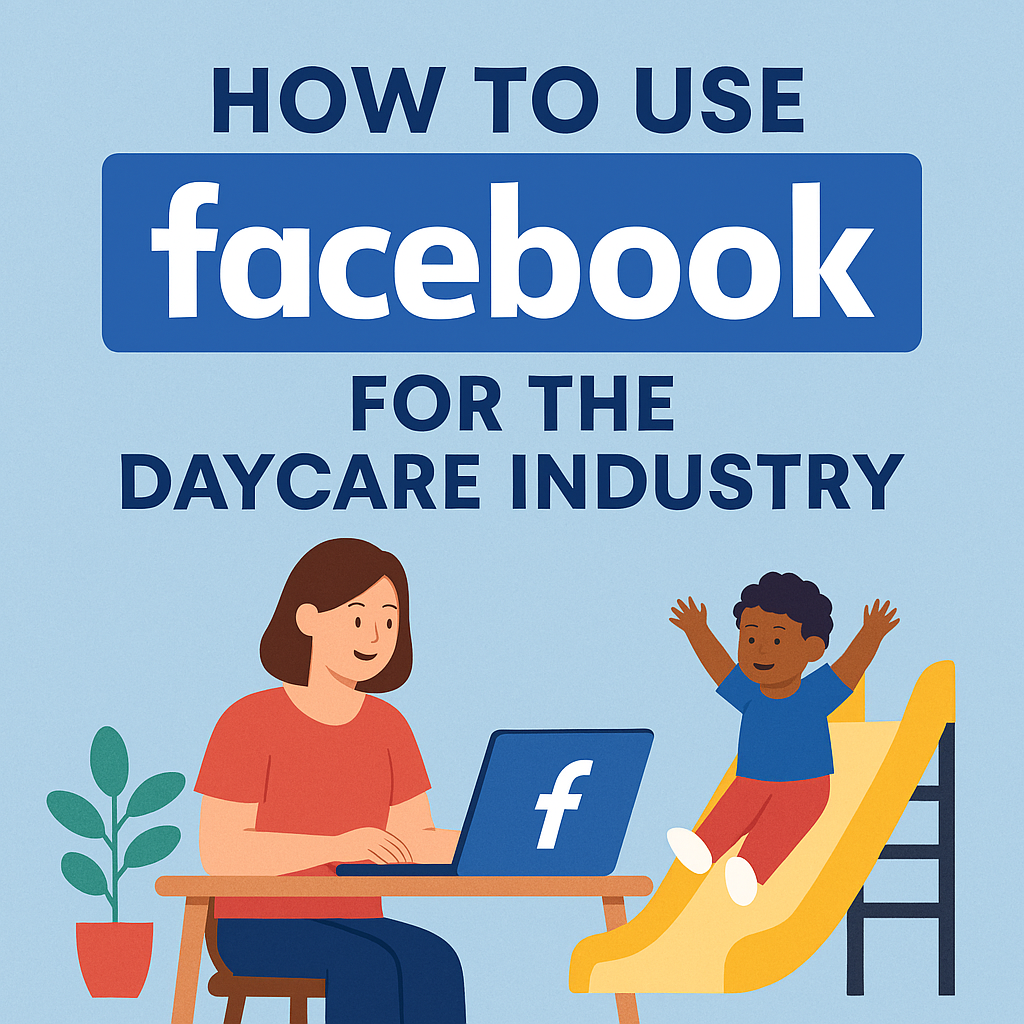
How to Use Facebook for the Daycare Industry

Facebook is one of the most effective marketing platforms for childcare centers looking to increase enrollment and build trust with local families. With parents actively researching options online, your Facebook presence becomes a critical tool for visibility and credibility.


1. Optimize Your Facebook Page

Your Facebook Page should serve as a professional, fully‑built profile for your daycare.

For deeper guidance on optimizing local childcare marketing, visit
👉 Marketing resources

What to include:

  • Logo as your profile image
  • A warm, friendly cover photo of your daycare space
  • Updated address, hours, contact info
  • A link to your tuition or enrollment page
  • A “Book Now” or “Call Now” button

A complete page boosts visibility in local searches.


2. Post Trust‑Building Content

Parents want to feel confident in the environment, routines, and educational approach.

Post ideas:

  • Activity spotlights
  • Classroom environments
  • Learning themes
  • Staff introductions
  • Parent testimonials
  • Event announcements

To strengthen your content strategy, check out:
👉 Content marketing tips

Posting consistently (3–4 times a week) keeps your daycare top‑of‑mind.


3. Participate in Local Parent Groups

Parent groups are incredibly valuable for organic reach.

Share helpful content like:

  • Parenting tips
  • Local events
  • Early‑education insights
  • Announcements about enrollment openings

Avoid hard selling — build trust by being helpful.

For guidance on community‑driven growth:
👉 Engagement Strategies


4. Use Facebook Ads to Fill Enrollment

Paid ads help you reach families within a few miles of your center.

Best ad tactics:

  • “Book a Tour” campaigns
  • Open house promotions
  • Limited‑spot announcements
  • Preschool or summer camp registration ads

Even small budgets perform well when properly targeted.

For ad templates and strategies, see:
👉 Get help!


5. Streamline Parent Communication Through Messenger

Parents expect fast replies — Facebook Messenger makes this easy.

Set up:

  • Auto‑replies
  • Enrollment FAQs
  • Links to your tour‑booking form
  • Inquiry routing

Need help automating this?
👉 Get help!


6. Increase Reviews to Build Trust

Positive reviews greatly influence parent decisions.

Encourage reviews by:

  • Asking after positive parent interactions
  • Sending a simple reminder link
  • Adding a QR code to enrollment packets

More reviews = more trust + more enrollments.

Get more strategies here:
👉 Get help!


7. Share Educational Information

Position your daycare as an expert by sharing:

  • Learning milestones
  • Safety best practices
  • Nutrition ideas
  • Child development tips

This builds authority and parent confidence.

For more content ideas:
👉 Get Help!


8. Promote Events

Use Facebook for promoting:

  • Open houses
  • Seasonal sign‑ups
  • Holiday events
  • Storytime days
  • Parent workshops

Facebook Events help you track interest and attendance.


9. Use Stories for Quick Updates

Stories are excellent for:

  • Real‑time updates
  • Daily activities
  • Reminders
  • Spotlights

They maintain constant visibility without needing polished posts.


10. Use Insights to Improve Results

Review your Facebook Insights to see:

  • What content performs best
  • When your audience is active
  • How many parents visit your website
  • Messenger engagement levels

Use real data to refine your strategy.

For analytics tips tailored to childcare centers:
👉 NEADSO’s daycare analytics guide

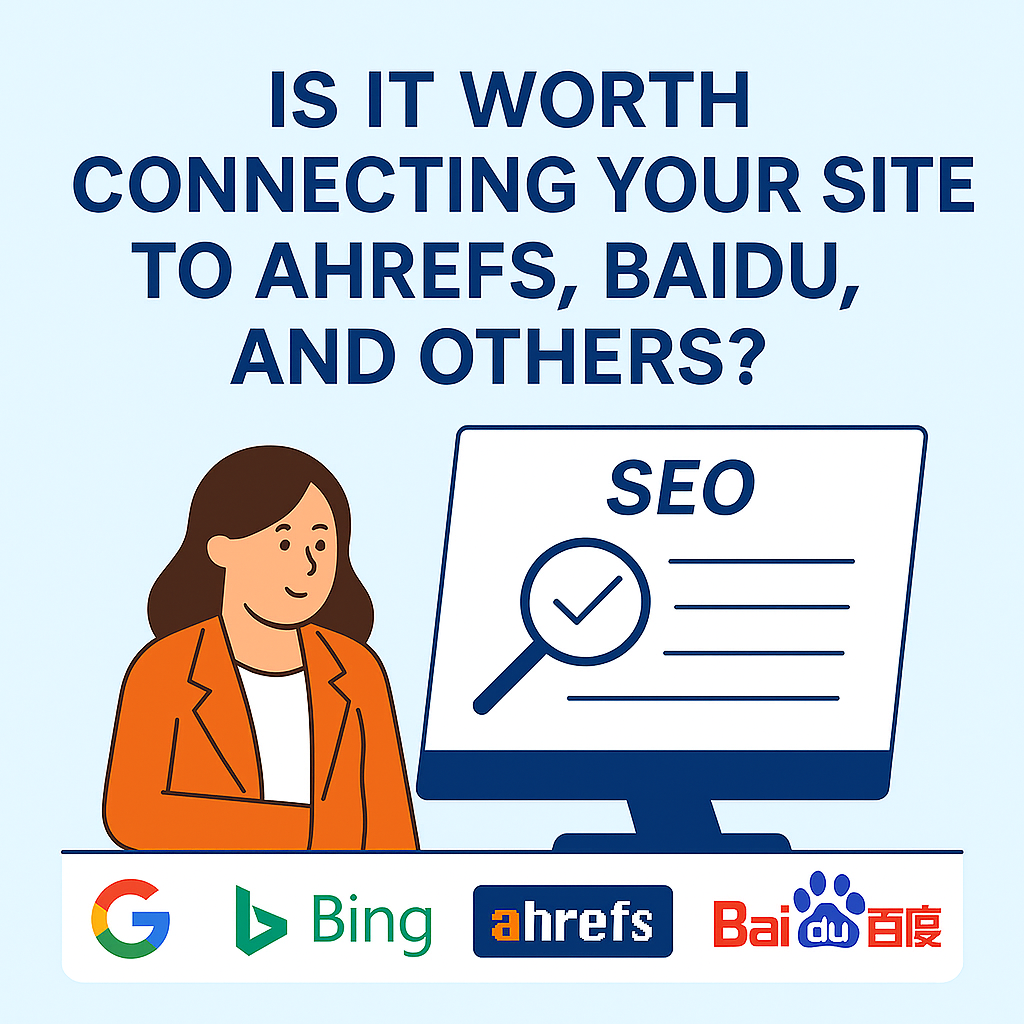
Is It Worth Connecting Your Site to SEO Platforms Like Ahrefs, Baidu, and Others? A 2026 Guide

In today’s SEO landscape, site connections and verifications—whether through Google Search Console, Bing Webmaster Tools, Baidu Webmaster Tools, or third‑party platforms like Ahrefs—play a crucial role in helping search engines understand your site, index it properly, and diagnose issues quickly. But is it actually worth your time to connect your website to all these services?

Short answer: Yes—if you choose the right ones.

Below is a breakdown, supported by verified sources, showing exactly what each connection does, why it matters, and which ones are worth prioritizing in 2026.


Why Site Connections Matter

1. Faster Crawling and Indexing

Submitting your site through official search engine webmaster tools helps search engines discover and index your content more quickly. Manual submissions aren’t always required, but they do help—especially for new websites or new pages.
Search engines automatically crawl content, but manual submission improves coverage and speed, especially when using tools like sitemaps and URL submission.

2. Monitoring Indexing Issues

Webmaster tools provide visibility into crawl errors, missing pages, and server issues—all things that hurt rankings if left unresolved. Bing Webmaster Tools’ IndexNow provides immediate feedback and insights on crawling errors and important URLs.

3. Improved SEO Performance

Third‑party SEO tools like Ahrefs provide actionable analytics, such as keyword rankings, competitor research, and backlink monitoring. Businesses use Ahrefs for keyword research, backlink insights, and site audits.

Ahrefs Webmaster Tools (AWT)—a free version—offers domain profile analysis, organic keyword insights, and technical SEO auditing, making verification especially valuable.


Which Site Connections Are Worth It? (Ranked by Priority)

1. Google Search Console (GSC)

Priority: Critical

Google still drives the majority of global search traffic. GSC lets you:

  • Submit sitemaps
  • Track indexing
  • Identify mobile issues
  • Monitor performance metrics
    Even Ahrefs notes that submitting websites to Google via sitemap submission is essential for discovery and ongoing updates.

If you connect to nothing else, connect to GSC.


2. Bing Webmaster Tools + IndexNow

Priority: High

Bing has grown significantly thanks to AI integration and partnership with Microsoft products. In 2024–2026 updates, Bing Webmaster Tools introduced new Top Insights and IndexNow features that boost visibility and help identify crawl errors, missing pages, and optimization opportunities.

IndexNow is particularly valuable because:

  • It notifies search engines instantly about new or updated content
  • Ahrefs and Yep.com fully support IndexNow integration (huge for rapid indexing)

3. Ahrefs Webmaster Tools (AWT) or Paid Ahrefs Account

Priority: Very High

Ahrefs is one of the leading SEO tools in 2026, offering:

  • Backlink analysis
  • Keyword tracking
  • Technical site audits
  • Competitor research
    It is widely used by professionals to enhance visibility and fix ranking issues.

Ahrefs AWT, while free, still gives deep domain audits, organic keyword insight, and technical issue detection. Verification is easy and often integrates directly with Google Search Console.


4. Baidu Webmaster Tools (for sites targeting China)

Priority: Only if you operate in China

Baidu requires manual website submission and verification for best visibility. Ahrefs notes that Baidu still supports manual site submissions via sitemap URLs.

If your business operates internationally—especially in Asia—this is worth doing. If not, you can skip Baidu.


5. Other Search Engines: DuckDuckGo, Yahoo, Yandex

Priority: Optional

Most of these engines rely on Bing’s index or independent crawling and don’t require manual submissions. Ahrefs confirms that DuckDuckGo and Yahoo do not require manual submission for most sites.

Should You Connect to Ahrefs, Baidu, and Others?

Here’s the overall verdict:

PlatformWorth It?Why
Google Search Console✔✔✔ CriticalIndexing, performance, crawl errors
Bing Webmaster Tools + IndexNow✔✔ HighFast indexing and insights; partners with many platforms
Ahrefs Webmaster Tools✔✔✔ Critical for SEOBacklinks, audits, keyword analysis
Baidu Webmaster Tools✔ If targeting ChinaNeeded for visibility due to China’s search ecosystem
DuckDuckGo / YahooOptional

A strong SEO foundation doesn’t happen by accident. It happens when your site is properly connected to the right platforms, monitored with the right tools, and supported by accurate technical insights. Whether you’re using Google Search Console for indexing, Bing Webmaster Tools for insights and IndexNow speed, or Ahrefs for deep technical and backlink analysis, each integration plays a role in your site’s long‑term success.

If you want to make sure your website is fully optimized, technically sound, and set up for better rankings:

👉 Let us check your site for free:
FREE SEO TOOL

This free audit tool helps identify issues, uncover optimization opportunities, and show you exactly where improvements can boost your visibility.