Every business owner wants more customers. So, when business slows down or growth stalls, the first instinct is often to spend more on advertising.
Google Ads. Facebook Ads. Instagram promotions. Local sponsorships.
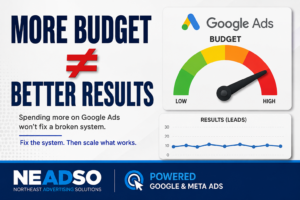
Advertising can absolutely be an effective way to grow your business—but only if your website is prepared to convert visitors into leads and customers.
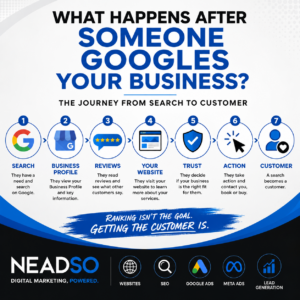
Think of your website as the foundation of your marketing. If that foundation has cracks, every advertising dollar you spend becomes less effective. Instead of generating new business, you’re paying to send potential customers to a website that may be confusing, outdated, or difficult to use.
Before increasing your marketing budget, take a close look at these common website problems that could be costing you customers.
1. Your Website Doesn’t Clearly Explain What You Do
You have just a few seconds to make a strong first impression.
When someone lands on your homepage, they should immediately understand:
- What your business does
- Who you serve
- Why they should choose you
- How to contact you
Too many websites rely on clever slogans or vague marketing language that leaves visitors guessing.
Instead of trying to be clever, focus on being clear.
A headline like:
“Helping Rhode Island Businesses Grow Through Digital Marketing”
is far more effective than something generic like:
“Solutions That Drive Success.”
Clarity builds confidence.
2. Your Website Loads Too Slowly
Today’s customers expect websites to load almost instantly.
If your pages take several seconds to appear, visitors may leave before they ever see your services.
A slow website also affects your visibility in search engines, making it harder for new customers to find you organically.
Common causes include:
- Oversized images
- Outdated hosting
- Too many unnecessary plugins
- Poor website optimization
- Excessive scripts and animations
Even small improvements in loading speed can increase conversions and improve your search rankings.
3. Your Site Isn’t Mobile-Friendly
More than half of website traffic now comes from smartphones and tablets.
If visitors have to pinch, zoom, or struggle to navigate your site, they’re likely to leave and visit a competitor instead.
A mobile-friendly website should feature:
- Easy-to-read text
- Large tap-friendly buttons
- Simple navigation
- Fast loading pages
- Contact information that’s easy to find
Remember, many customers will first discover your business on their phone—not a desktop computer.
4. Your Calls-to-Action Are Weak—or Missing
After someone visits your website, what do you want them to do next?
Too many websites leave visitors without clear direction.
Every important page should encourage users to take a specific action, such as:
- Schedule a consultation
- Request a free estimate
- Call your office
- Book an appointment
- Fill out a contact form
Make your buttons stand out and use action-oriented language.
Instead of:
“Learn More”
try:
“Get Your Free Quote Today”
Clear calls-to-action increase conversions because they eliminate uncertainty.
5. Your Website Doesn’t Build Trust
Customers rarely buy from businesses they don’t trust.
Your website should answer the question every visitor is silently asking:
“Why should I choose you instead of someone else?”
You can build trust by including:
- Customer testimonials
- Google reviews
- Before-and-after photos
- Case studies
- Industry certifications
- Awards
- Professional team photos
- Years of experience
- Community involvement
Real people, real reviews, and real results create credibility that advertising alone cannot.
6. You’re Ignoring Local SEO
Many businesses depend on customers within their city or region.
If your website isn’t optimized for local search, you’re missing valuable opportunities.
Make sure your site includes:
- Your city and service areas
- Consistent business name, address, and phone number
- Individual service pages
- Google Business Profile integration
- Location-specific content
- Frequently asked questions
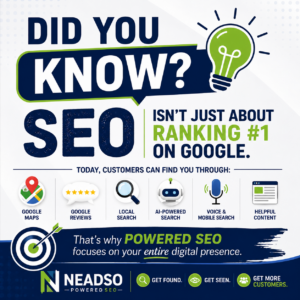
These improvements help search engines—and increasingly AI-powered search experiences—understand where you operate and which customers you serve.
7. You’re Not Measuring What Works
One of the biggest mistakes businesses make is spending money without tracking results.
If you don’t know where your leads come from, it’s impossible to improve your marketing.
Every business should monitor:
- Website traffic
- Contact form submissions
- Phone calls
- Search rankings
- Most visited pages
- Conversion rates
Data allows you to invest your marketing budget where it delivers the greatest return.
Your Website Should Work as Hard as You Do
Advertising isn’t the problem.
In fact, paid advertising can produce excellent results when it’s paired with a high-performing website.
But sending more traffic to a website with poor messaging, slow performance, weak calls-to-action, or trust issues is like pouring water into a bucket with holes in it.
Before increasing your advertising budget, invest in strengthening the website those visitors will see first.
The Bottom Line
Your website is often the first impression potential customers have of your business. It should do more than look professional—it should educate visitors, build confidence, and make it easy for people to take the next step.
At NEADSO, we help businesses create websites that don’t just attract visitors—they convert them into customers. From modern web design and search engine optimization to content marketing and local SEO, we build digital marketing strategies that maximize every dollar you invest.
Before you buy more ads, make sure your website is ready to turn clicks into customers.
If you’re not sure where your website stands, contact NEADSO for a professional website evaluation and discover opportunities to improve your online presence and generate more leads.